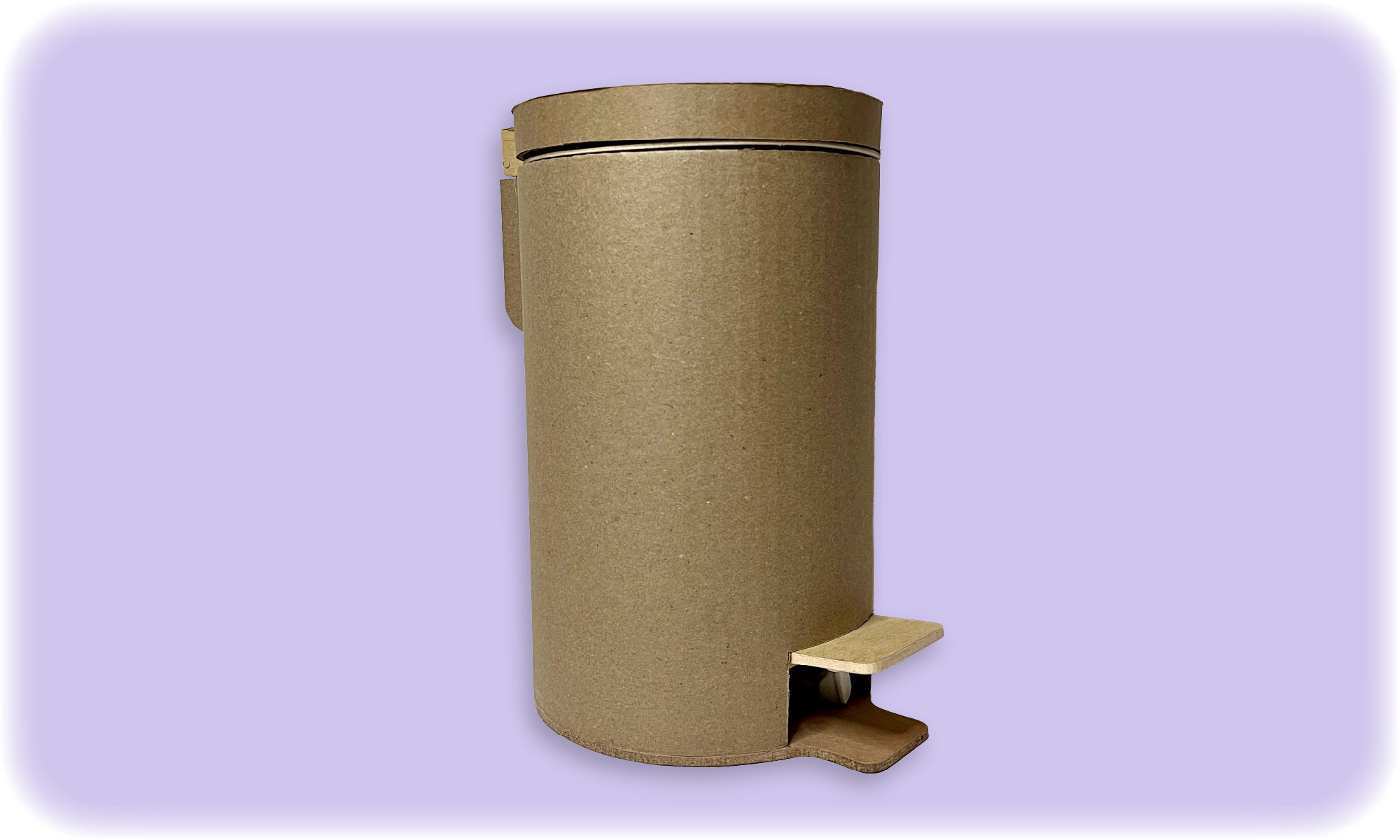
Pedal Trash Can
Mechanical Cardboard Fabrication
- Duration
- 2 weeks
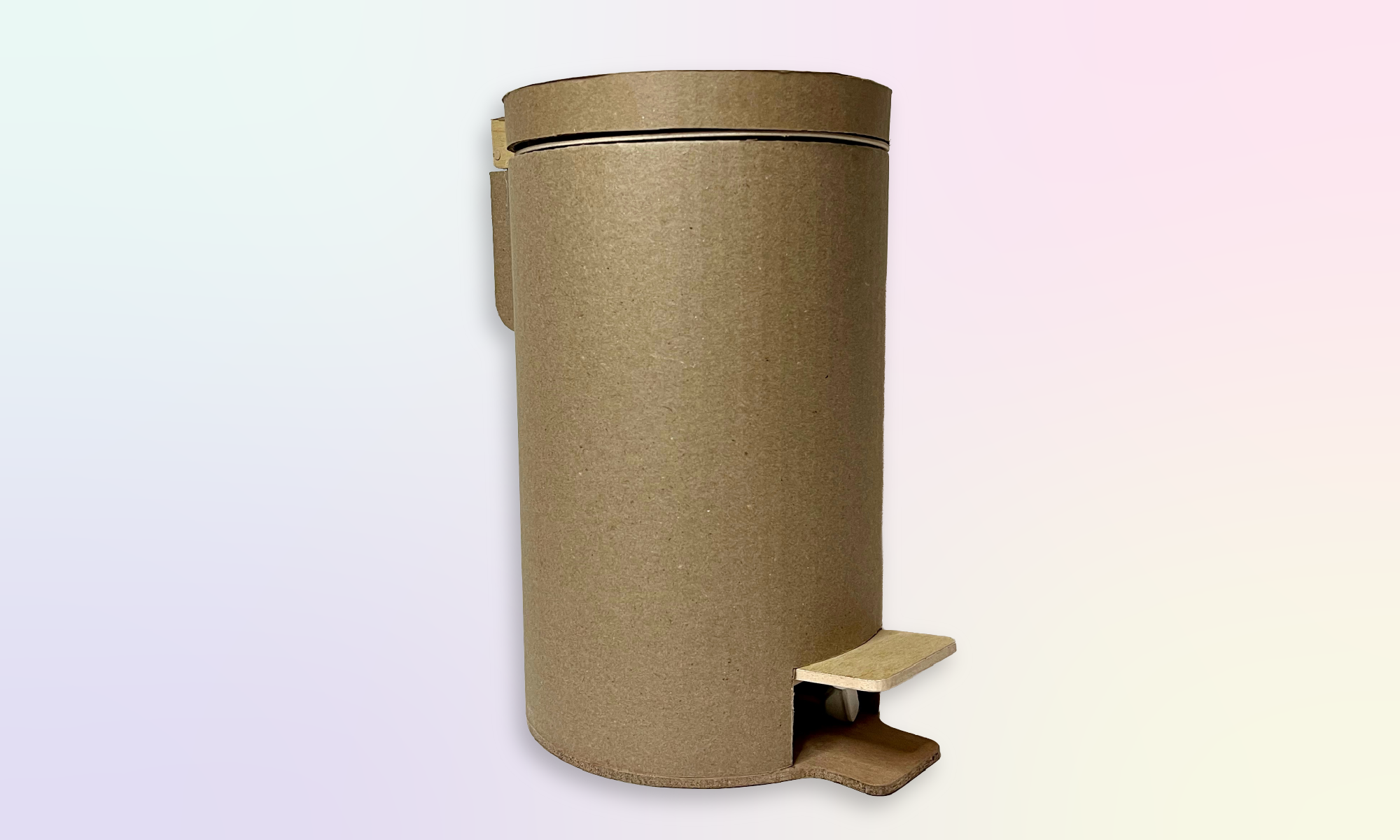
The Opportunity
This project was a hands-on assignment to test our physical fabrication skills. Although an initial mechanism was proposed, the instructor encouraged experimentation.
My Approach
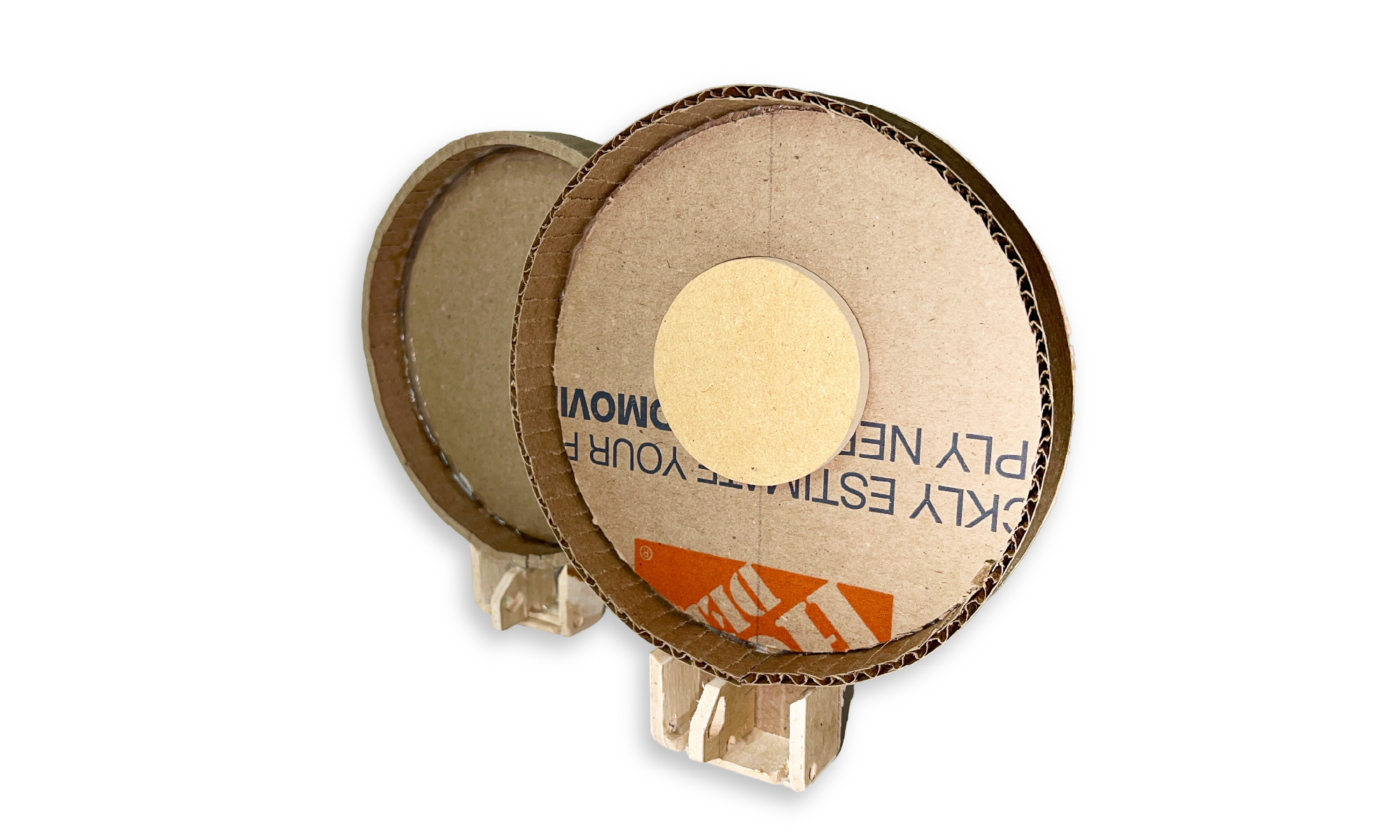
I analyzed in detail the mechanism of an existing pedal trash can, including its metal rods and their angles. I then faithfully recreated this mechanism using wooden dowels and cardboard, resulting in a fully functional model.
The Results
My instructor commended both my decision to reengineer the mechanism and the overall cleanliness of the constructed model.
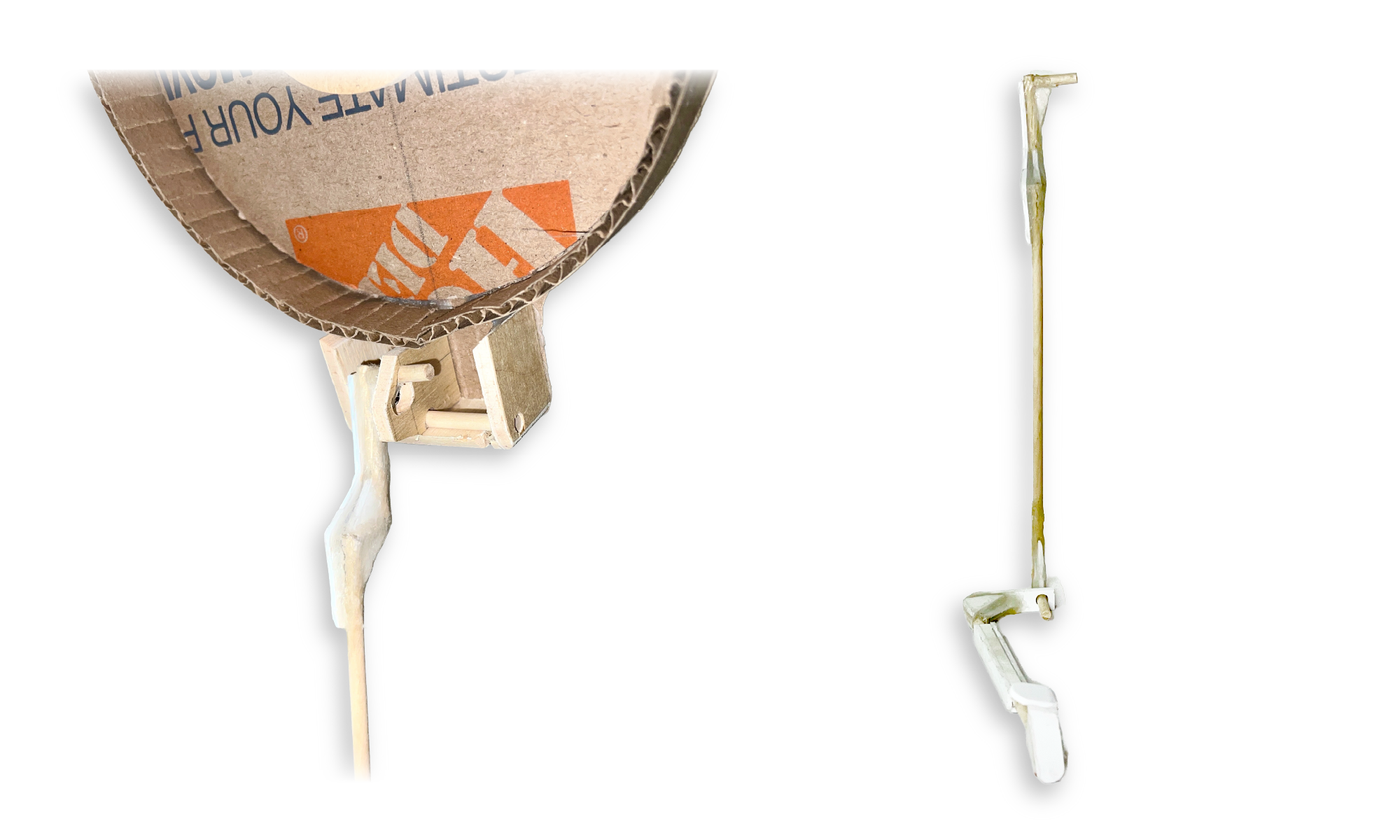
Proposed Mechanism | Existing Mechanism |
I noticed that constructing the trash can with the proposed mechanism resulted in an awkward, visible column at the rear. Drawing from knowledge of commercial models, I recalled that most pedal trash cans feature a minimal box at the top, connecting the main body and the lid. I set out to understand how existing designs conceal the entire assembly in such box.
The actual mechanism works by having a secured, angled rod at the bottom. Pressing the pedal rotates this rod around its lock point, which in turn lifts its bent back side upwards. A second rod is attached here which pushes the lid open
Final Model
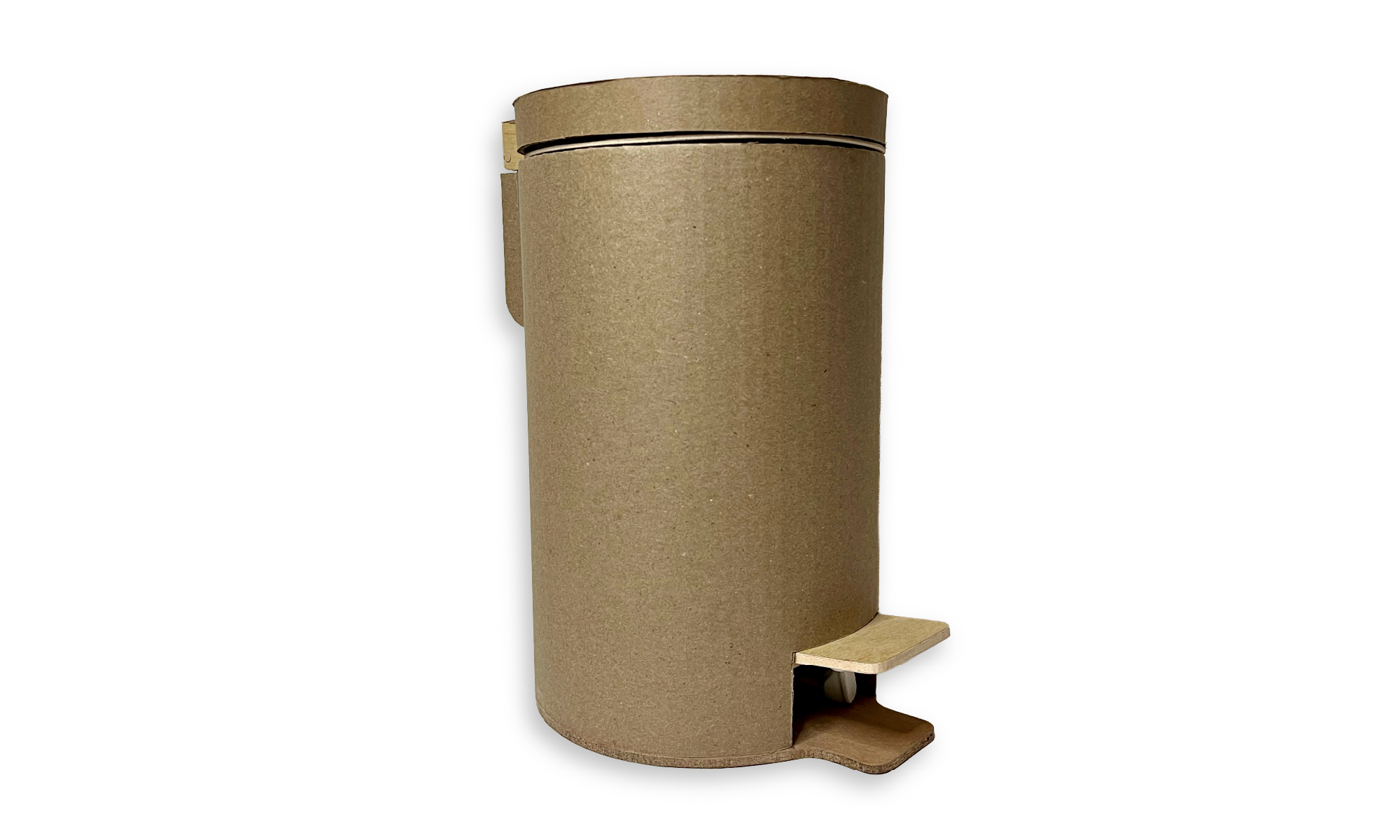
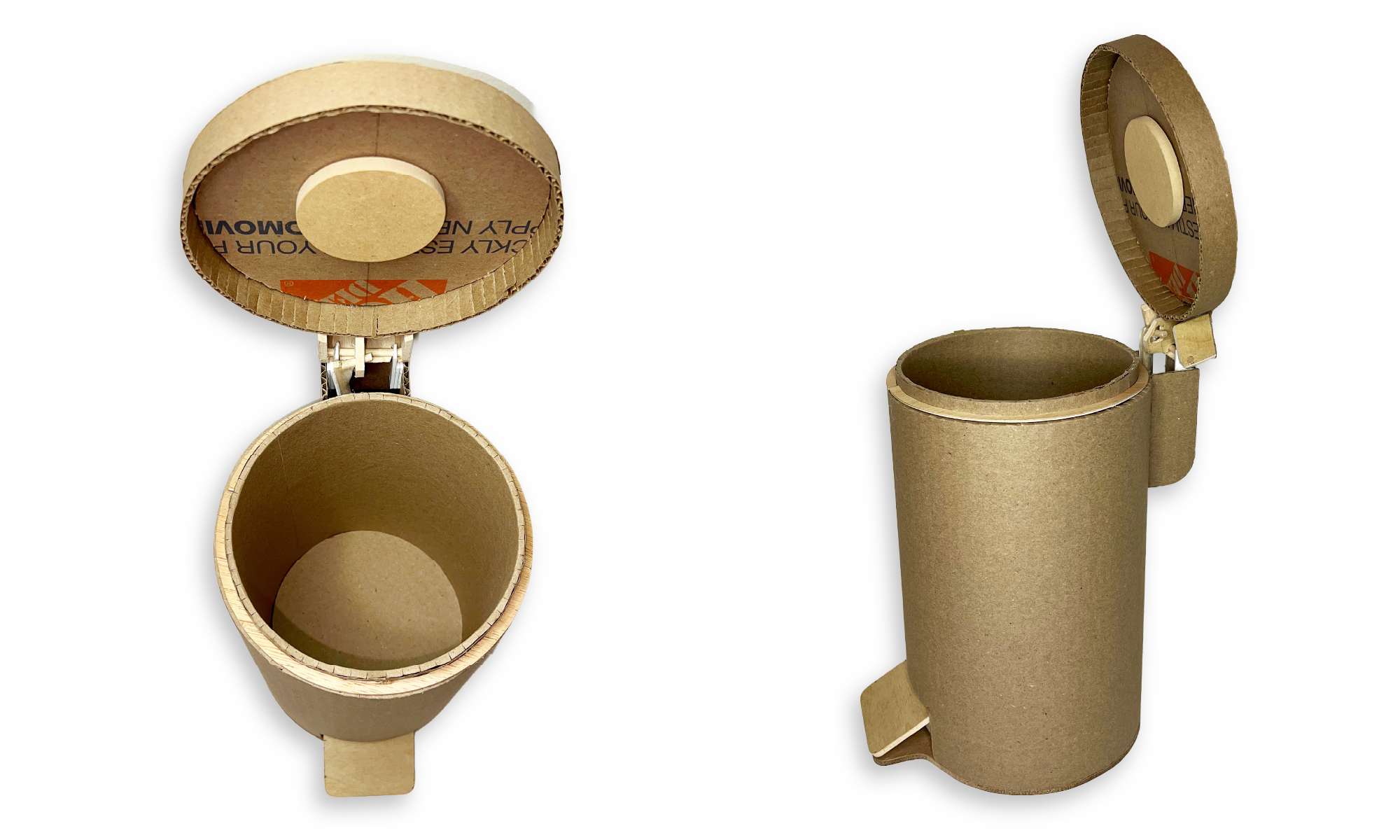
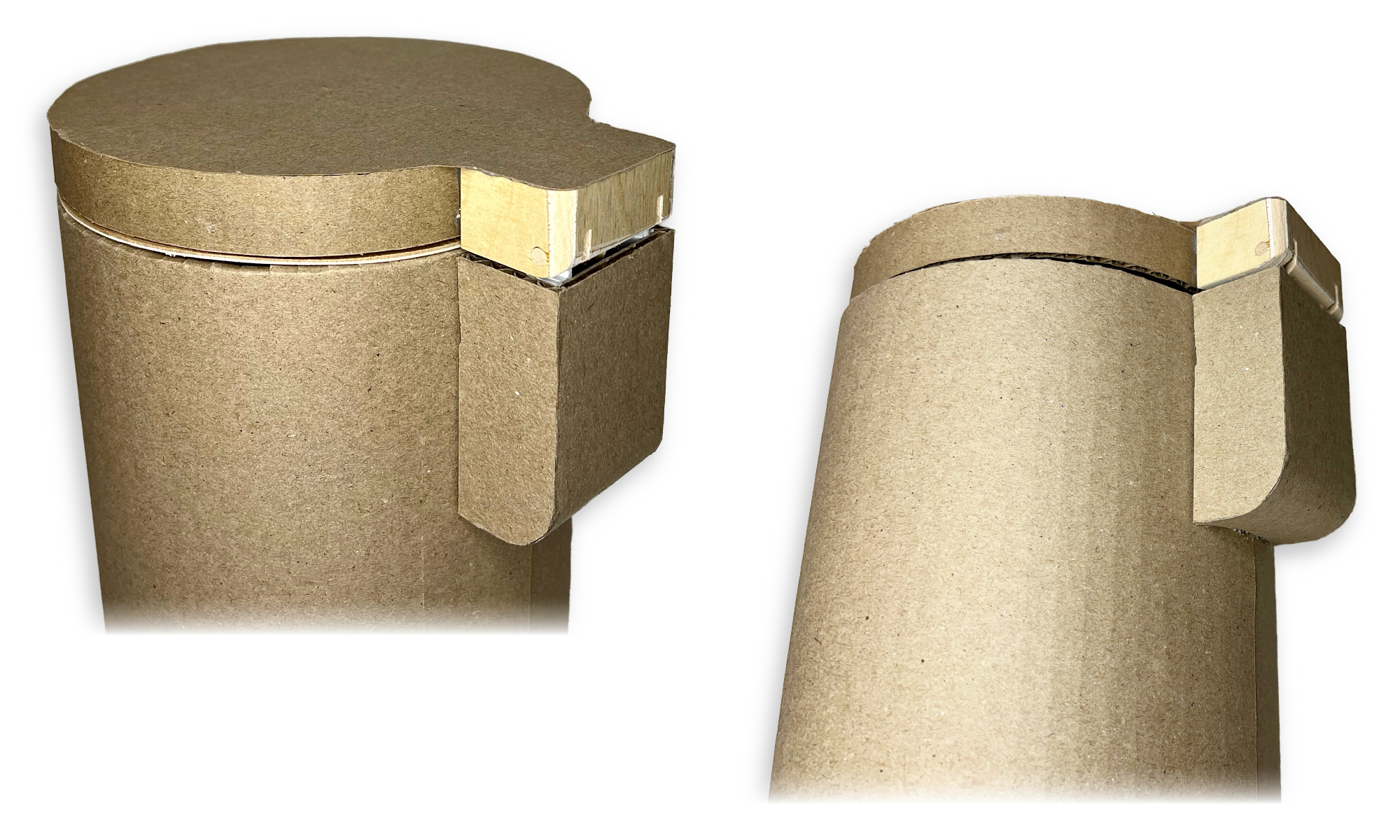
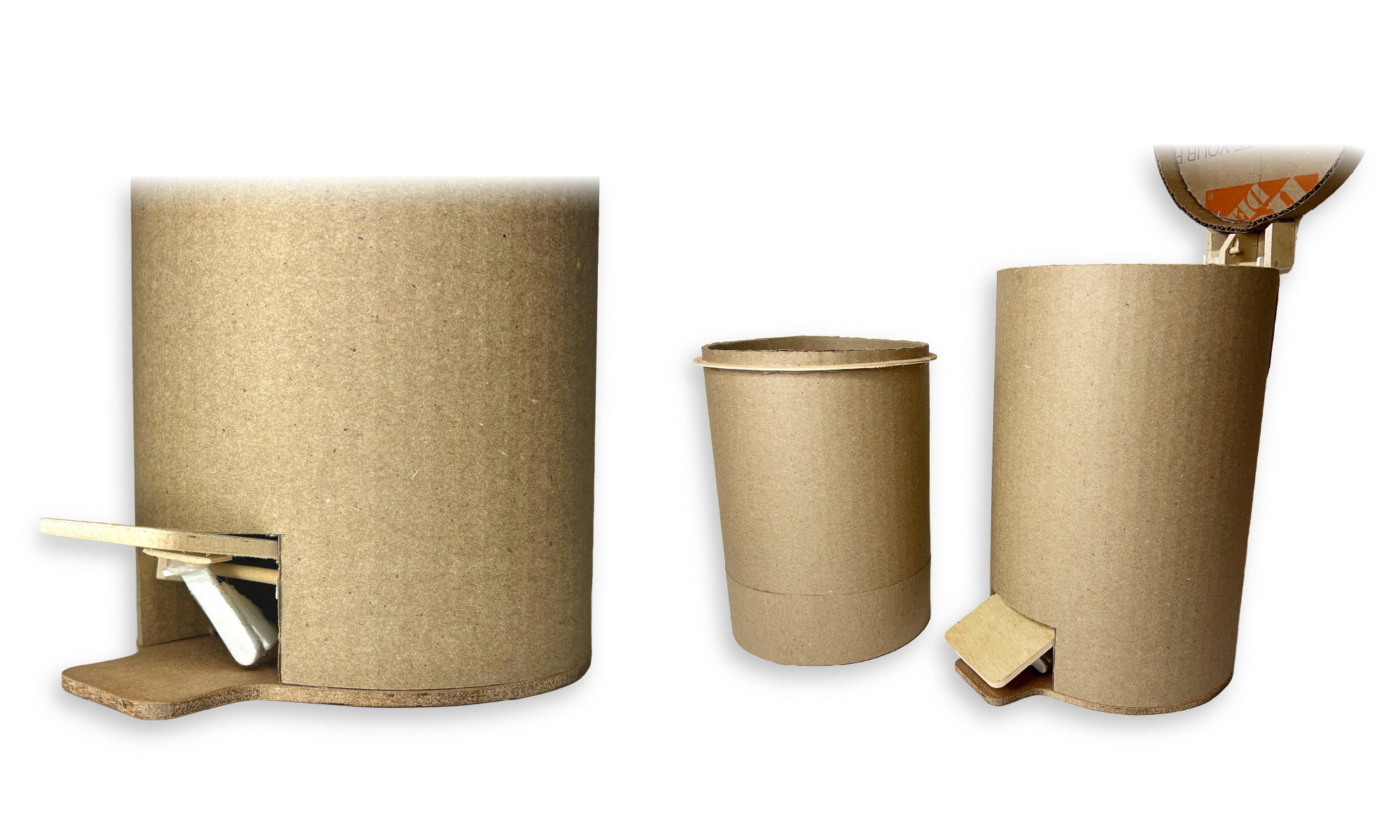
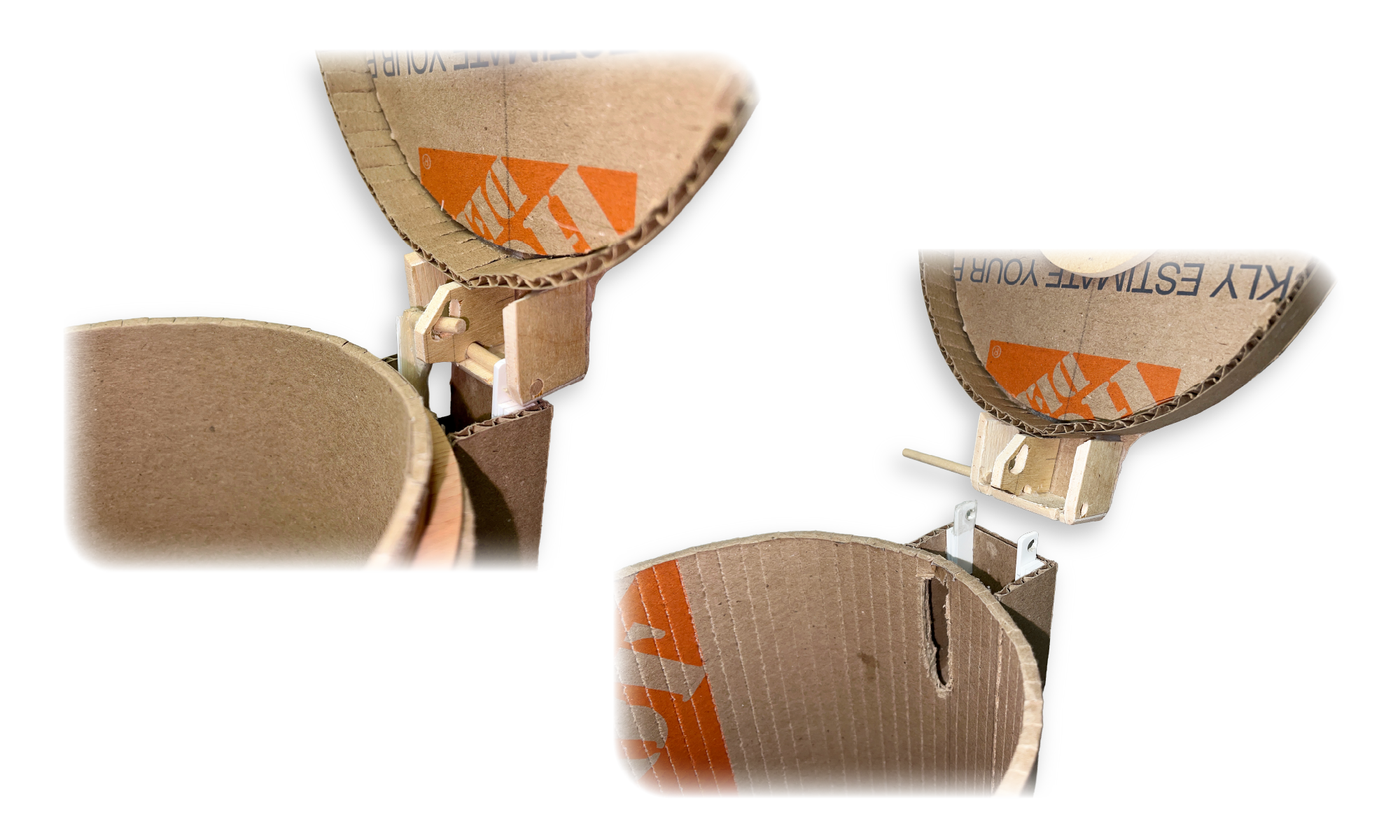

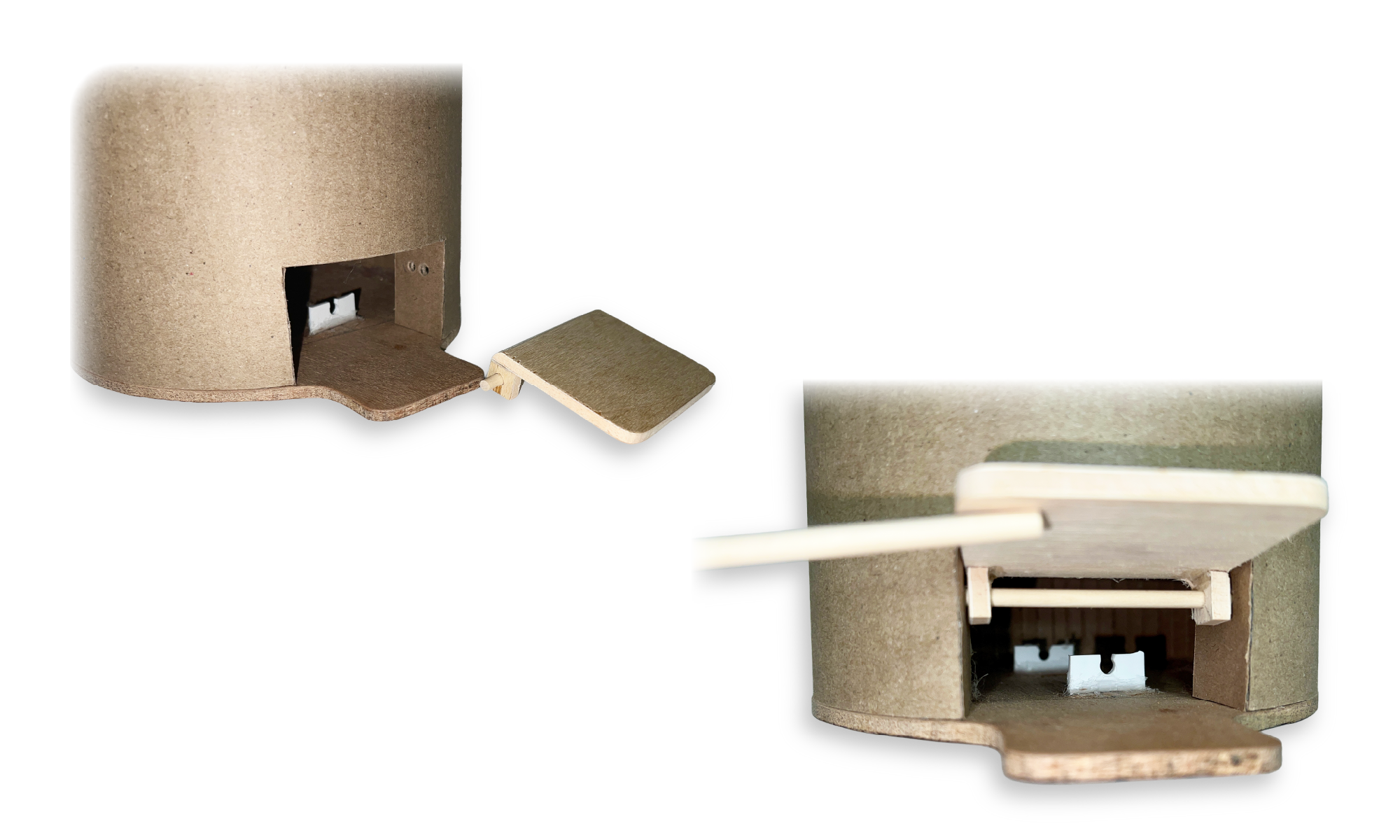
The original lid resulted too heavy for the mechanism to lift.