Lint Roller Eco-Redesign
A Data-Driven Analysis to Minimize Environmental Impacts
- Duration
- 10 weeks
The Opportunity
Making a product more sustainable is a good motivator for me. As a cat mother, I always find myself cleaning her floof from my couch, her bed, and my clothes after snuggling her. I looked closer at the tool I employ for cleaning, a lint roller.
My Approach
I conducted a comprehensive cradle-to-cradle Life-Cycle Assessment of the lint roller's components. With LCA software I analyzed the environmental impact of each part to identify key areas of improvement. Finally, I applied the Okala Ecodesign Strategy Wheel to propose design directions.
The Results
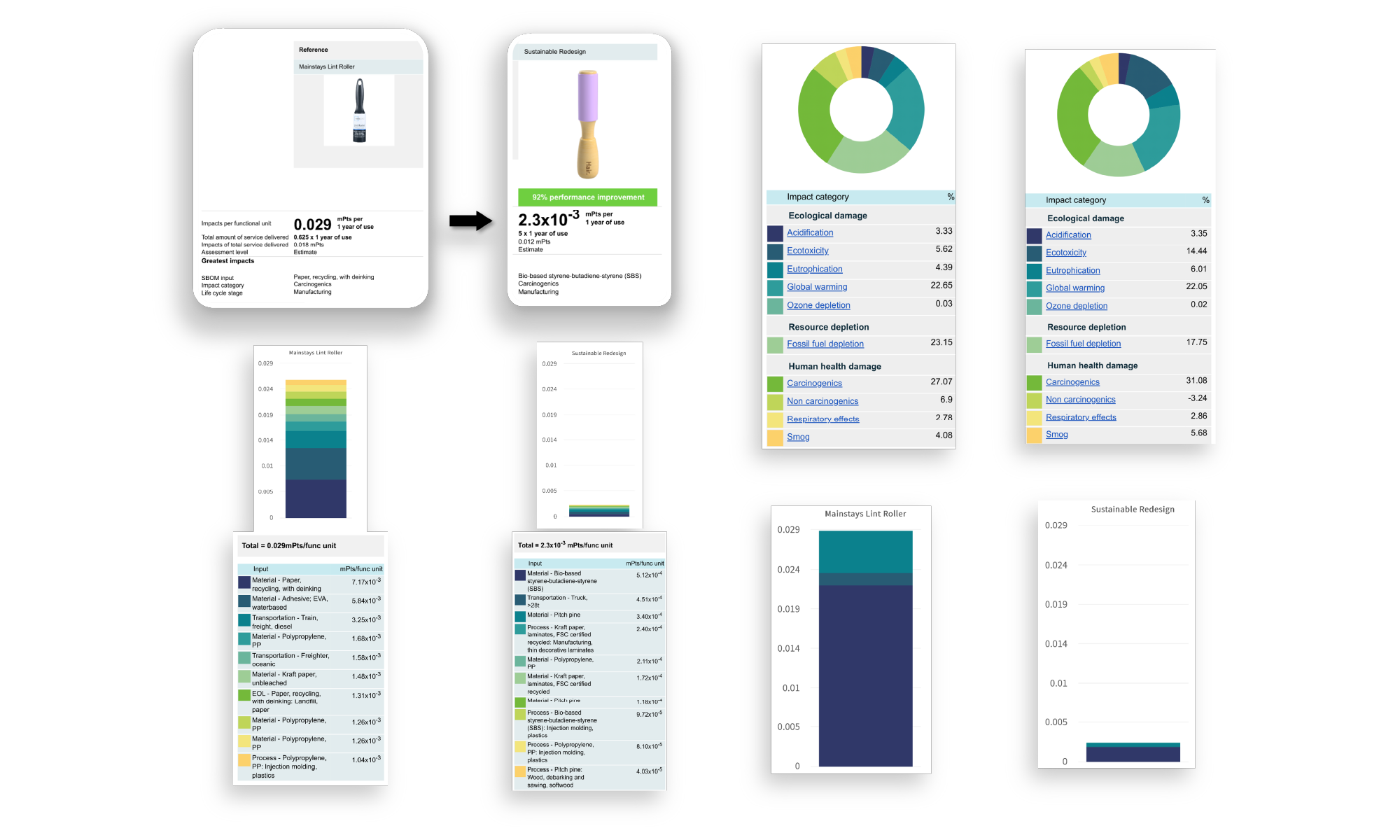
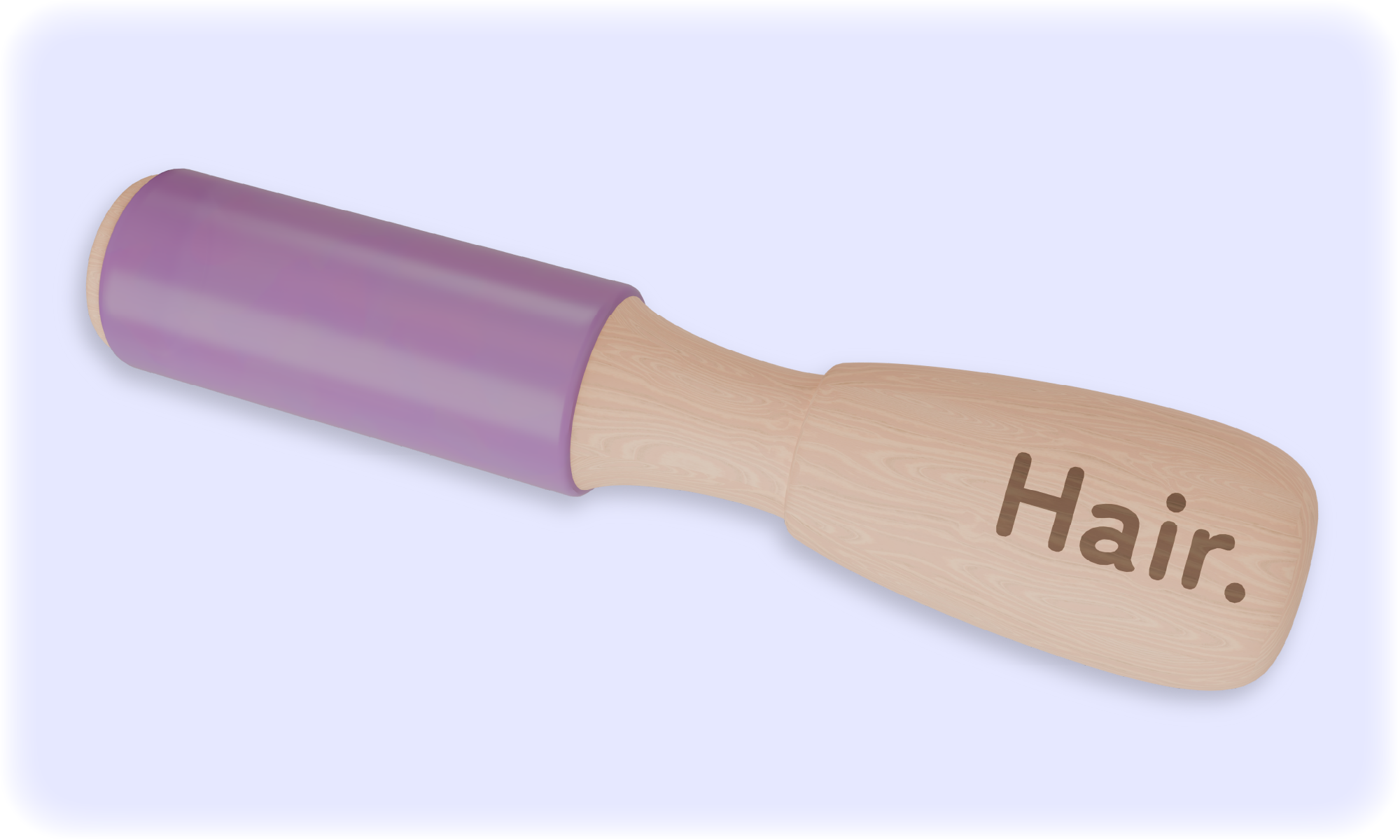
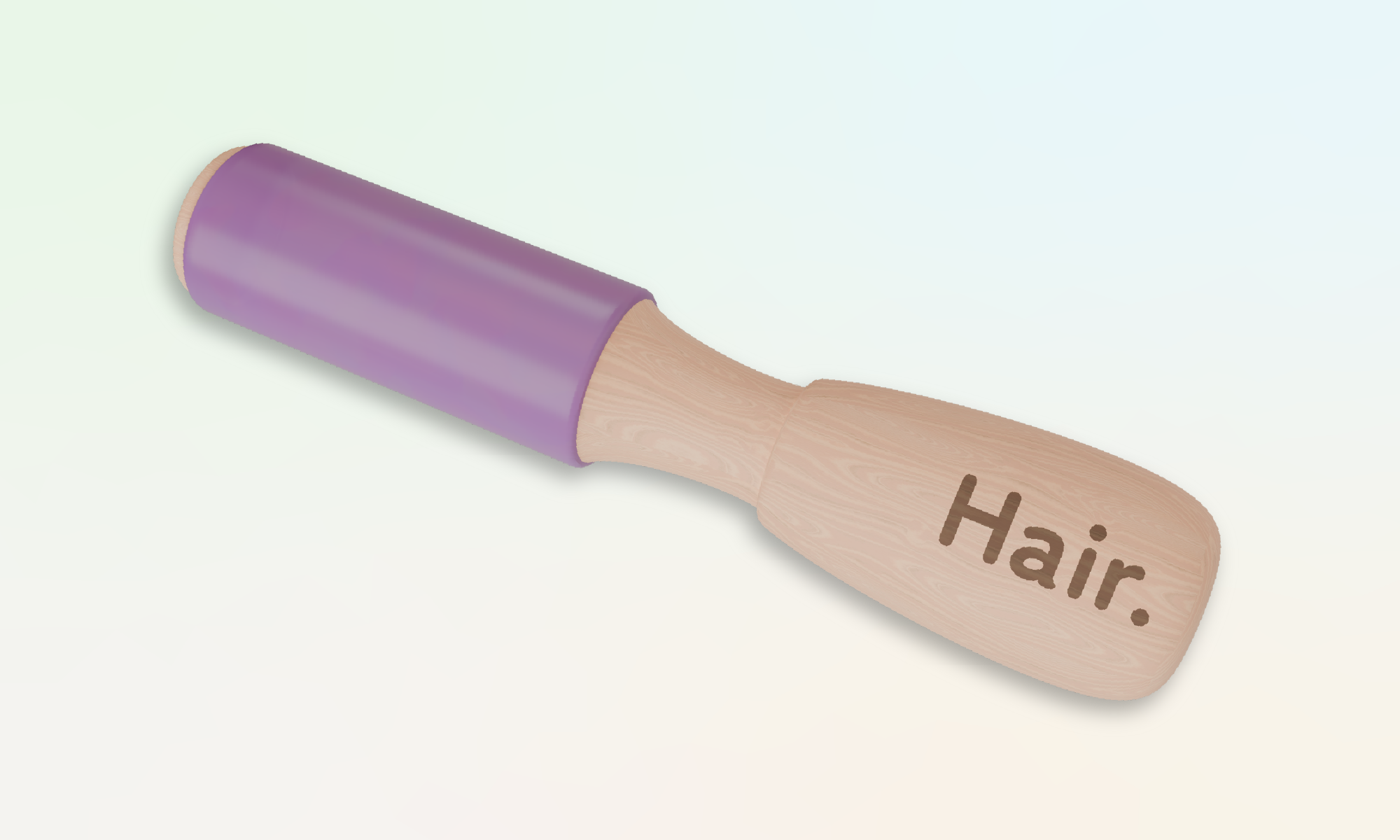
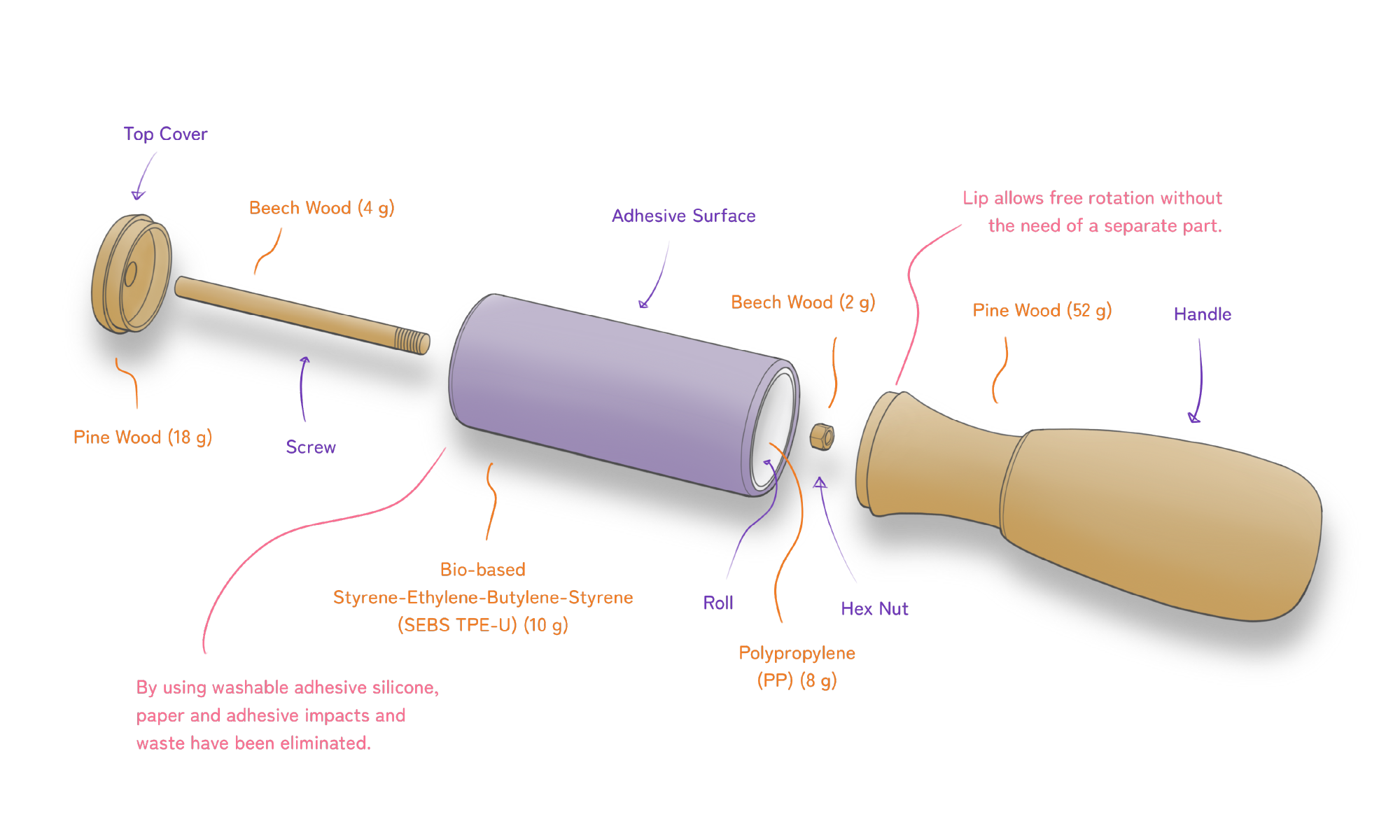
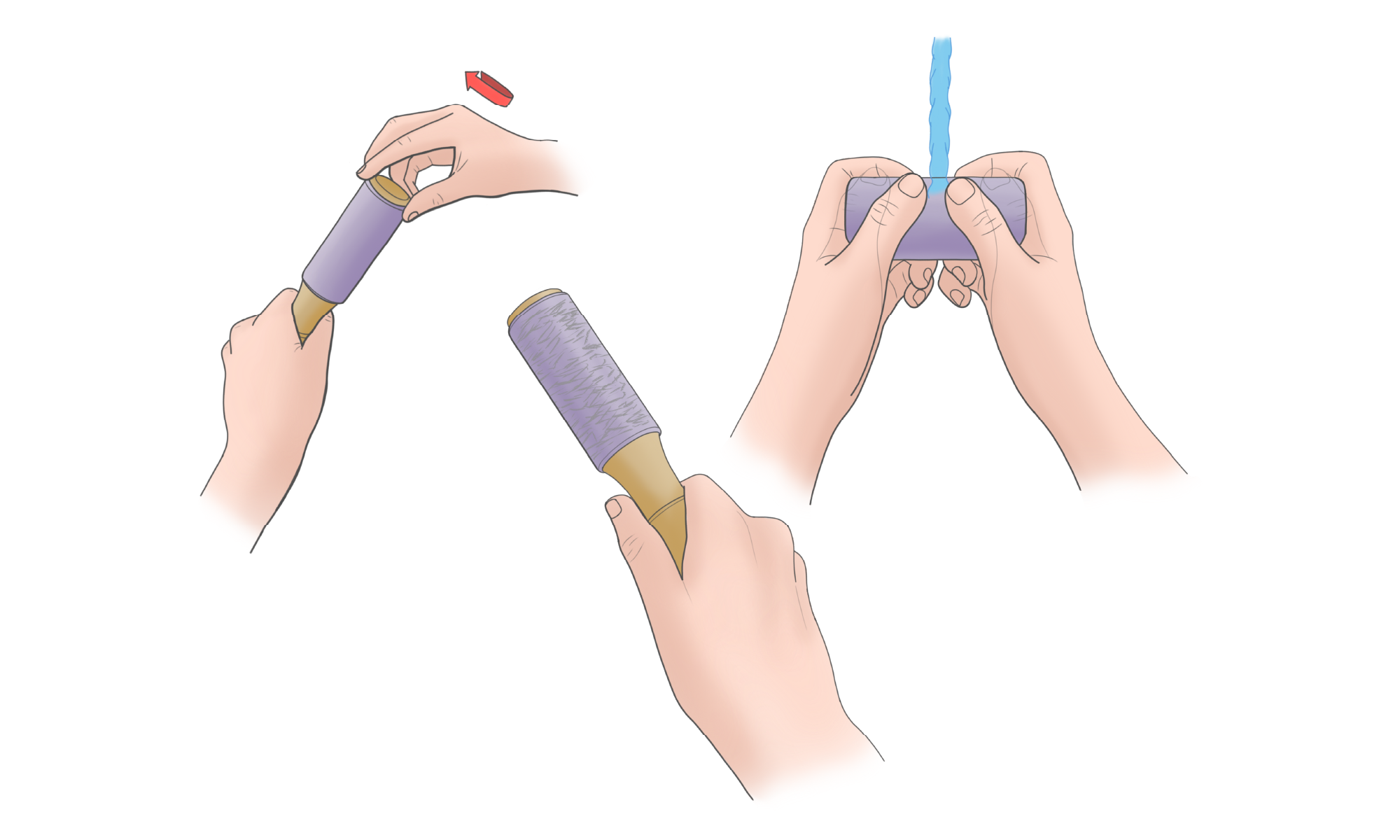
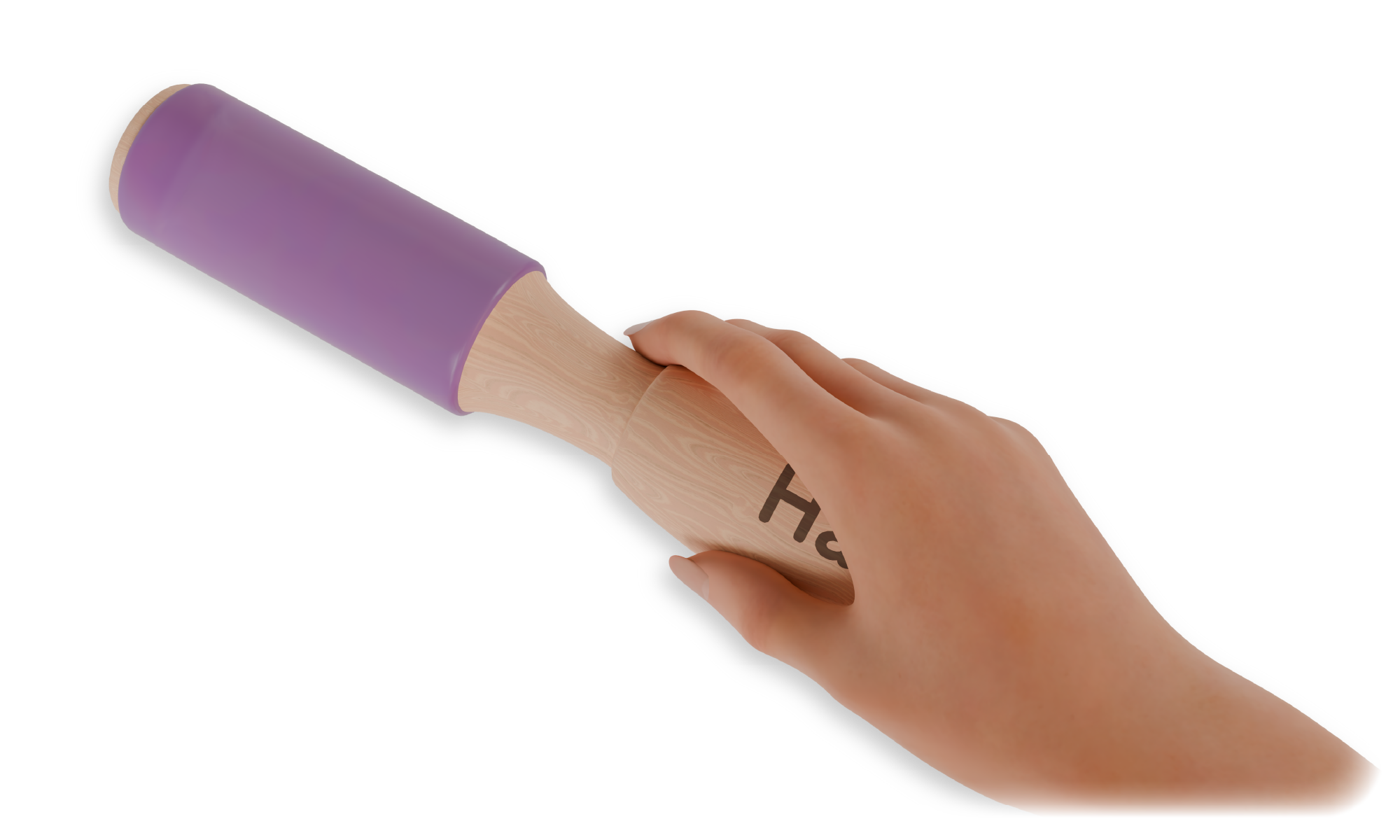
The redesigned lint roller features a new system, resulting in a 92% performance improvement. To enhance durability and appeal, the initial purchase includes a keepsake wooden handle. I have replaced single-use sheets with washable elastomer, significantly reducing the environmental impact of the product.
Useful but Wasteful
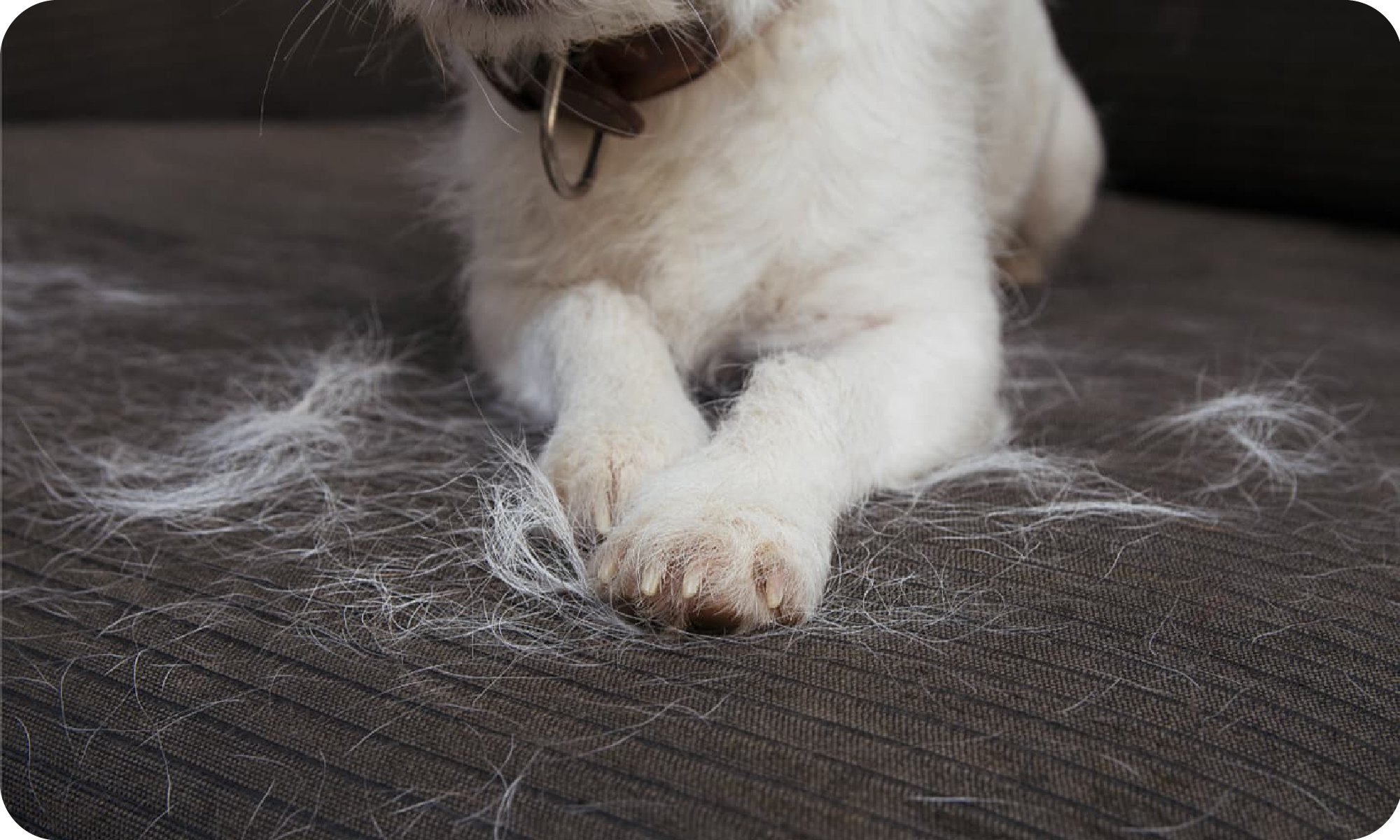
Lint rollers are useful for many situations, such as polishing up your outfit before heading out the door, or when putting away clean laundry. Pet owners especially rely on them to catch hair and lint off furniture and clothes throughout the home.
However, lint rollers create significant waste. Since the adhesive sheets are designed for a single use, replacing them often means buying a new plastic handle, contributing to landfill waste.
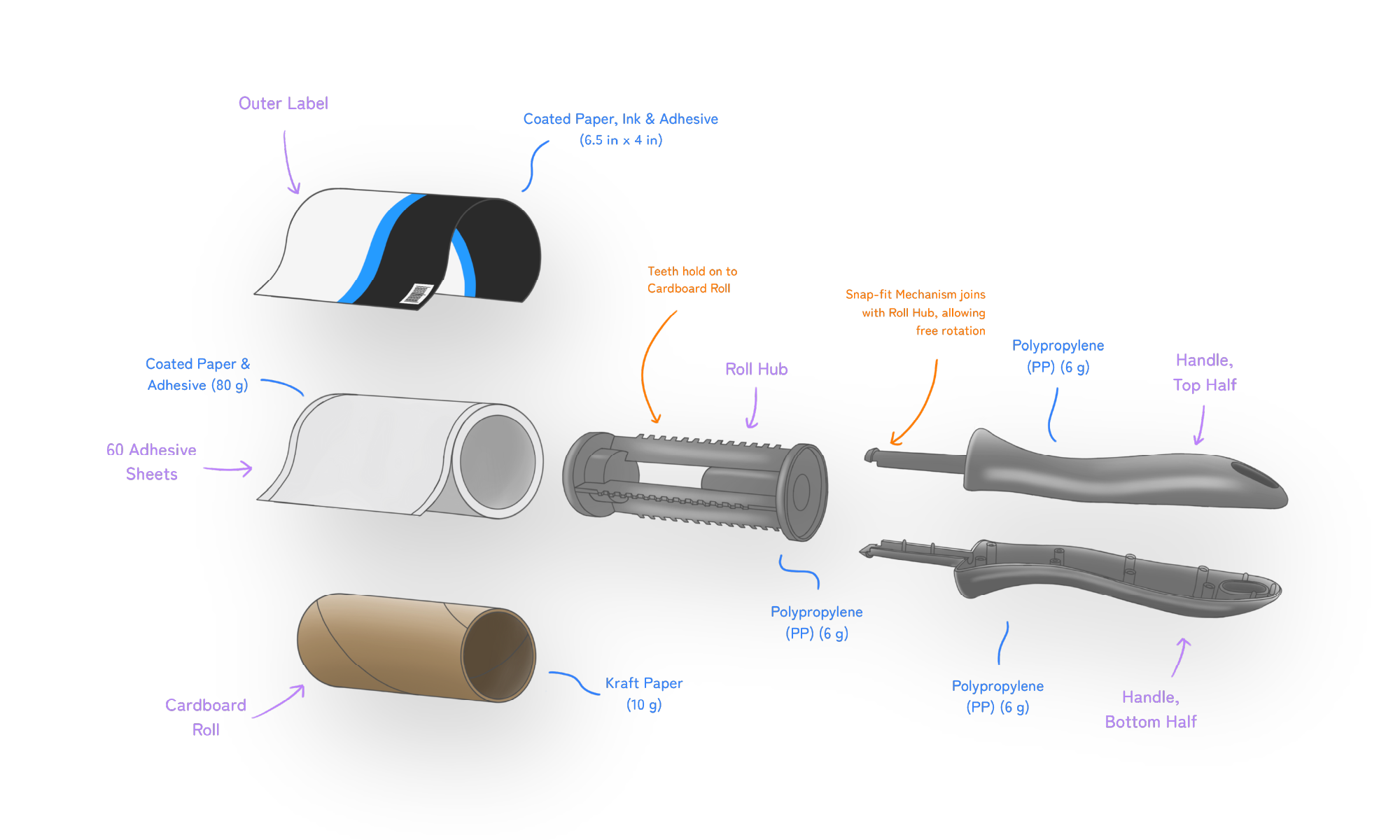
Study Candidate: Mainstays 60-Sheet Lint Roller
Anatomy and Inventory
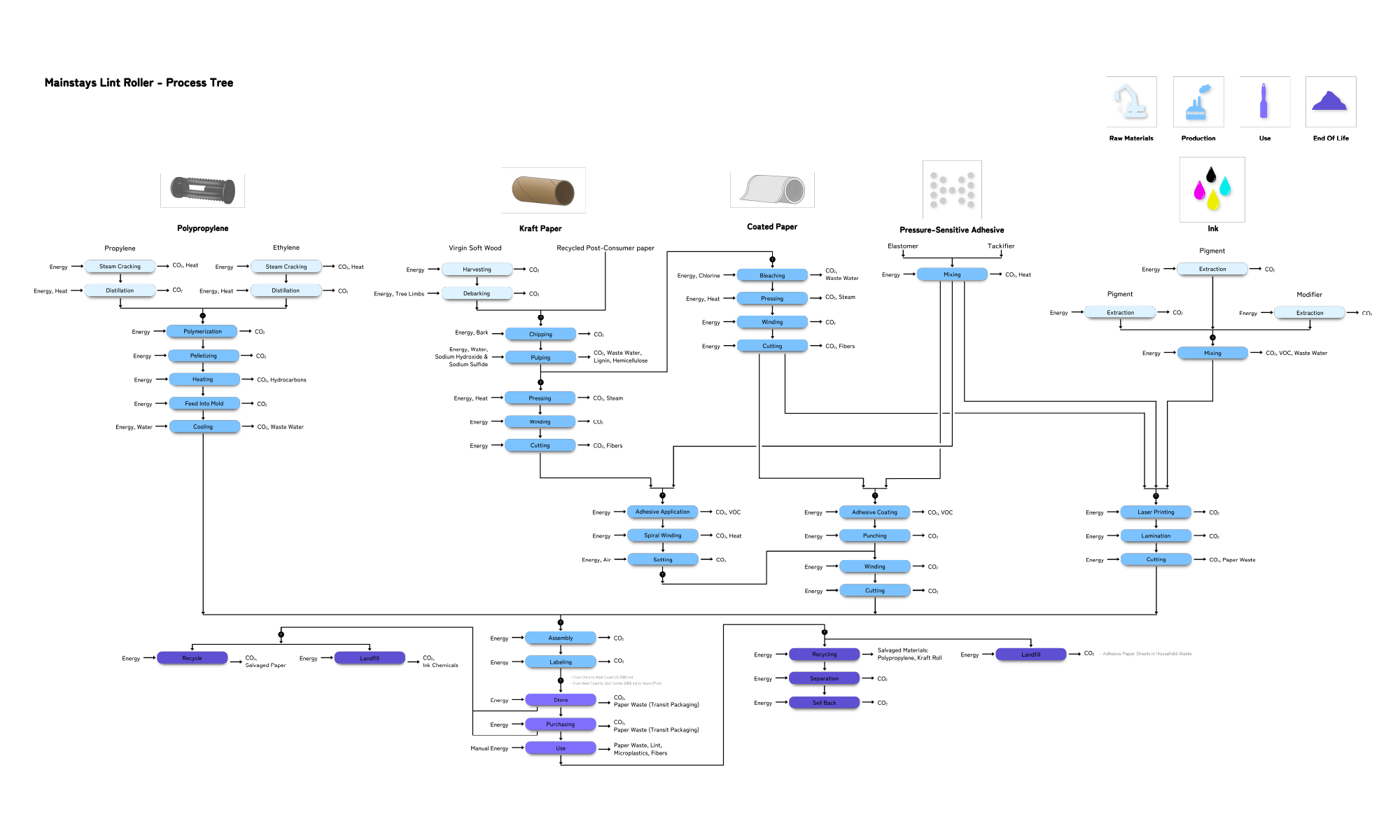
Manufacturing Process Tree
LCA Using SustainableMinds.com
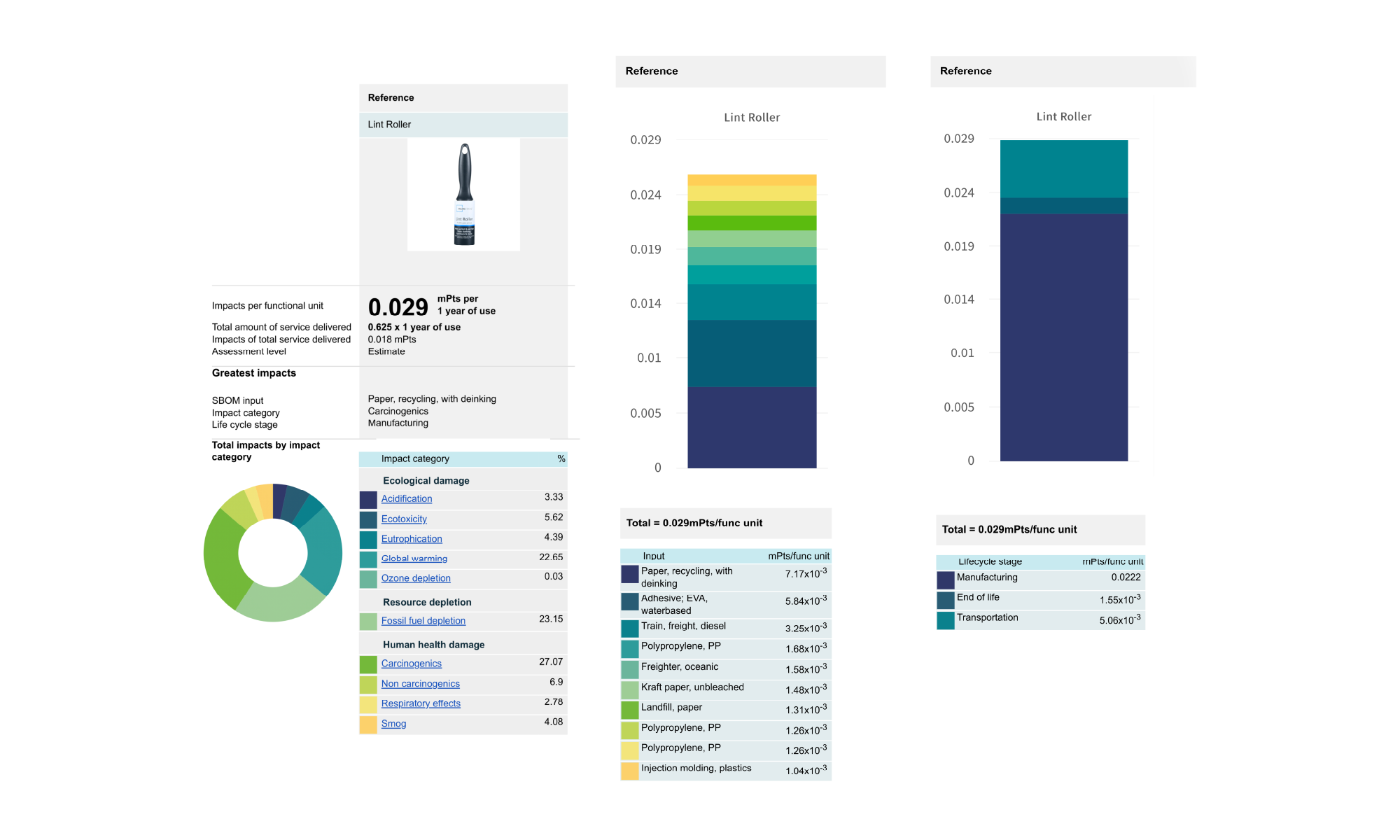
My research revealed impactful categories, such as carcinogens from the plastic handle as well as substantial CO2 released at nearly every lifecycle stage.
Possible Okala Ecodesign Strategy Wheel Solutions

Foster emotional connection to the product
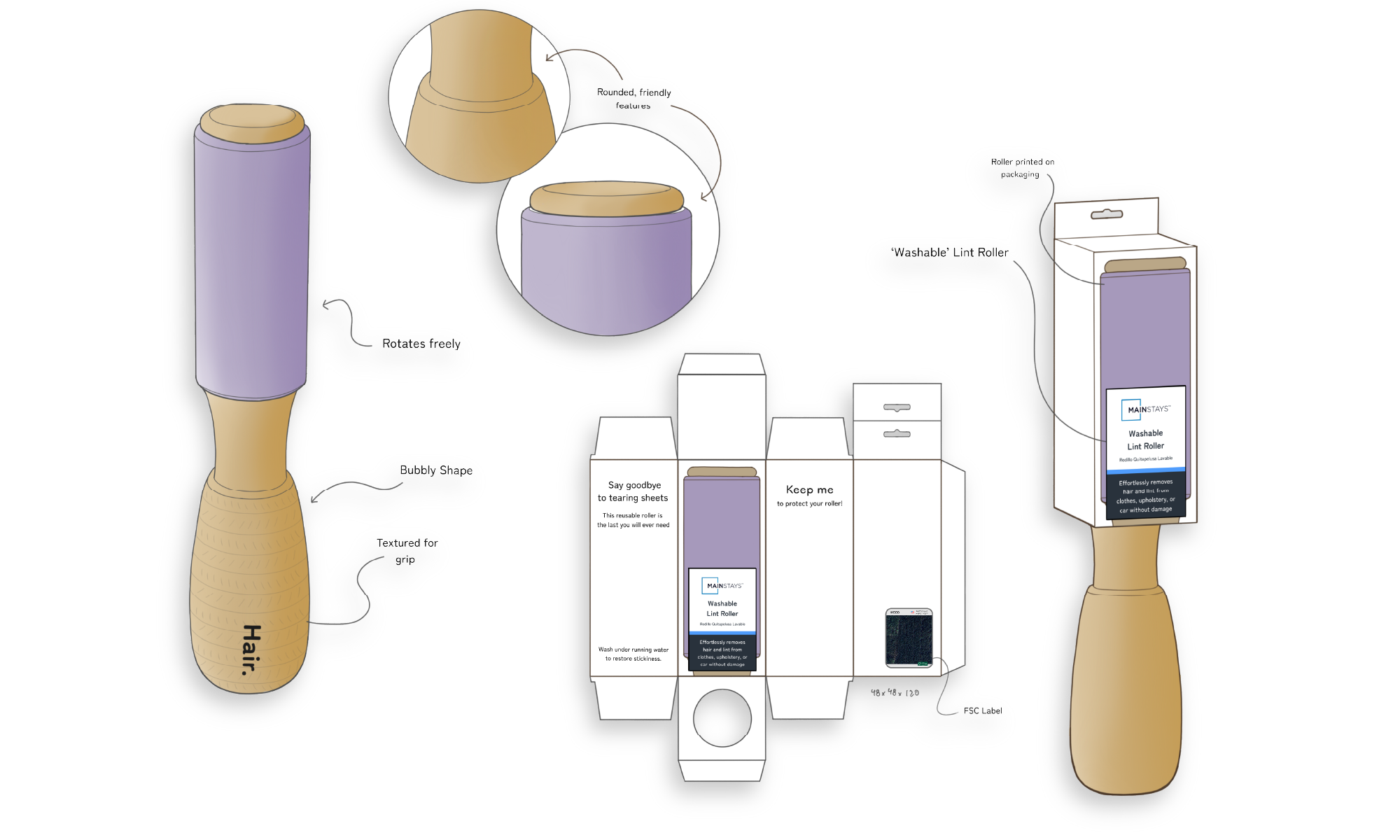
Generic design and cheap feel discourage the user from reusing the handle assembly with new sheet rolls in the future. Integrating design elements relating to animals and pets fosters a connection between the target user and the reusable elements of the product.

Minimize the quantity of materials
The current Handle Assembly is comprised of three separate and different parts, requiring different molds and separate plastic injections. A single injection molded part is capable of holding the Sheet Roll while allowing free rotation, and modifying the Roller’s holding angle to allow heavy duty use.

Provide for reuse of components
Current Label and in-store marketing does not promote reusing of the handle assembly, the lack of Sheet Roll replacements sold in store persuades the user to buy a whole new handle & roll after discarding their previous. Adding sheet roll replacements to the store’s inventory makes it more likely for the user to reuse the Handle Assembly.
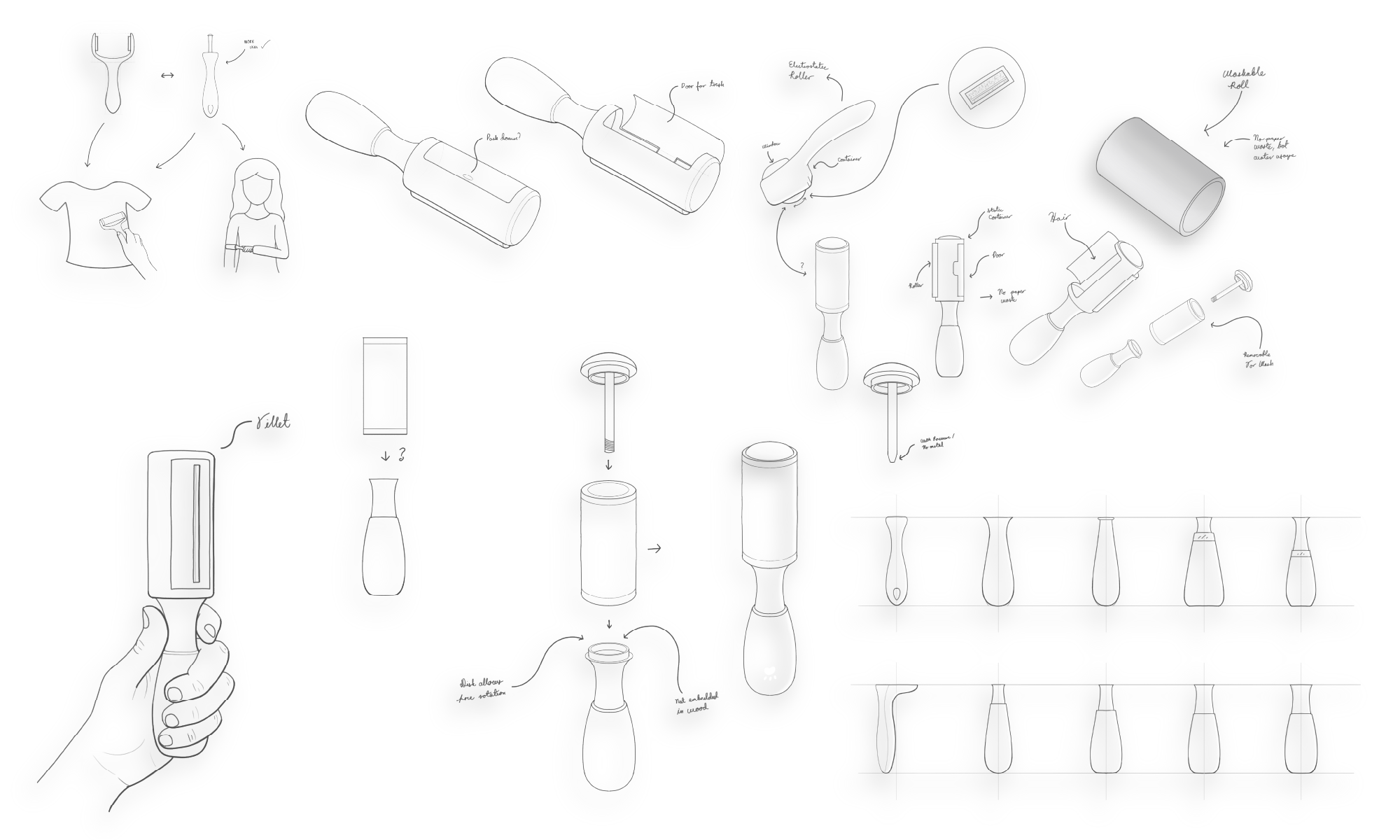
Concept Sketching
Final Concept
Redesigned Anatomy and Inventory
Usage
Results